
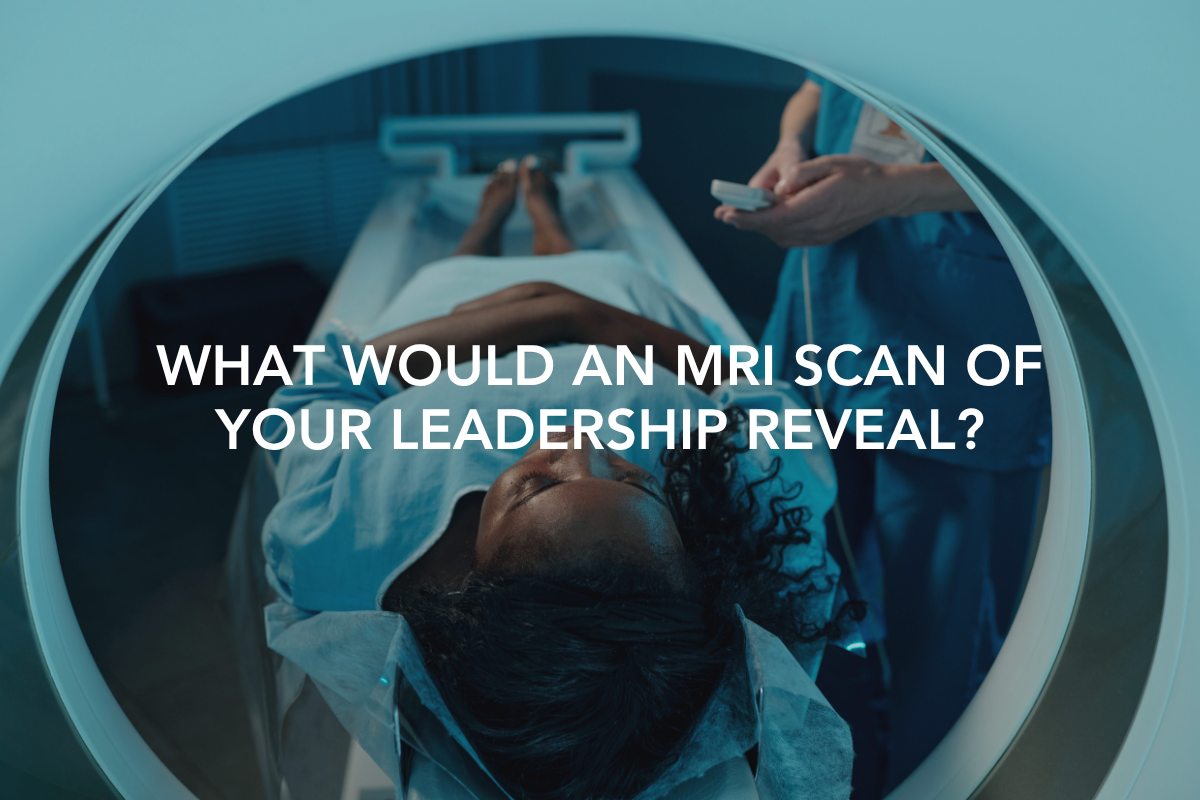
I recently had the “pleasure” of an MRI. It wasn’t my first, and I doubt it will be my last. Nothing serious – just one of those where a doctor wants to “be sure.” Of all of the scans available, the MRI is the gold standard of diagnostic detail. Ultrasounds, X-rays, and CT scans all play an important role in medical assessments, but the magic that takes place in the claustrophobic tube is nothing short of amazing. Using powerful radio frequency coils and magnets that are strong enough to attract a paper clip at 40 mph, a computer generates detailed images. And when contrast dye is thrown in, the detailed images get even more amazing. Every time I have a diagnostic test, I am afraid the technician is going to say, “Did you really eat that many peanut M&M’s today?!”
The beauty of MRIs is that they help a physician test assumptions. For example, is it cancer or something benign? Is there a serious issue developing, or is it nothing at all? Using their expertise, the radiologist produces a thorough report that provides assessments of the organs in a targeted area.
During this recent MRI, as I laid in the tube listening to classic rock, I thought to myself – what would it be like if we had an MRI for leaders and their organizations? What would we look for? And, what would it reveal?
While not as thorough as an MRI, at The Center Consulting Group, we do have ways to help leaders and organizations see what is happening within. If we were to conduct an MRI on your leadership or organization, here are the five areas we would examine to determine the level of health or pathology.
Heart: How healthy is the relational and emotional aspect of your leadership?
We often hear phrases like “She has a heart of gold” or “His heart is as cold as ice.” These phrases are attempting to describe the relational or emotional aspect of a person. This may sound like the soft stuff of leadership, but it is far more important than you realize. In many traditions, as well as in the Bible, everything flows from the heart – especially character, compassion, and courage.
But just like in the human body, it is hard for us to see the actual state of our heart as a leader. Sometimes we cannot face it because we know deep down that it isn’t a pretty sight. Other times, we are blind to it – thinking we are modeling a healthy heart while many around us see something much less attractive.
Head: How healthy is the critical thinking and decision-making of you and your organization?
When a person starts to show erratic or impulsive decisions, a medical professional may send them for a scan – especially when such behaviors are far out of character. The doctor is looking to see if a tumor or some other pathology is impacting the person’s critical decision-making.
Have you ever watched someone make a really bad decision, or three? I recently saw a leader send a message out to his team, and my first thought was – that was really bad! What was I reacting to? Why did I have that response? Not because of his heart but rather because of his head. He missed the opportunity to think critically, and that shaped the decision and messaging which led to negative results.
Eyes: How clear and compelling is your organizational vision?
A quote that is often attributed to Helen Keller, a well-known writer and disability rights advocate who lost her hearing and sight as a child, goes like this: “The saddest thing in the world are people who can see but have not vision.” I read that years ago and never forgot it, which is quite unusual for me! The eyes of a leader or organization reflect its vision, its ability to see something that can be but does not yet exist.
When a leader has vision, it can inspire staff, attract investors or donors, and produce amazing products or services that help others. But a visionless leader does just the opposite. They manage rather than inspire, and they attract others who lack vision rather than those who desire to be a part of something great.
Muscles: How strong is the team you rely on to execute the programs and goals?
Muscles reflect the team you have brought together. While leaders get a lot of credit for the success of their organization, what they should really get credit for is the strength of the team they recruit and retain. I know that is true here at The Center Consulting Group. The effectiveness of what we do is a direct result of each person on our team, including the consultants as well as our communications and client services team.
I read a book about two friends, one of whom is now in a wheelchair due to a disease that has affected his muscles. Before he becomes too ill or passes away, they decide to hike the five-hundred-mile Camino de Santiago trail. This trek means that the other friend, along with an additional person, will need to push and pull the wheelchair-bound friend up and down rocky mountain paths. They trained for months before embarking on their journey, knowing that without strong muscles, the hike would never be possible. Remember, the stronger the team (the muscle), the stronger the organization.
Skeleton: How well developed is the organizational structure that is in place?
I have a problem. While I still have reasonable strength left in this body of mine, my flexibility is barely existent. If a willow tree branch is a symbol of great flexibility, a toothpick would best represent me. After working with a trainer for six months, she told me I had made zero progress on my flexibility😊. I thought of asking for a refund, but I knew it wasn’t her fault that I have a rigid joint structure.
Organizational structure is not the most exciting thing to talk about, but it is vital to sustain an organization over the long term. The skeletal structure of your organization needs to be strong enough to carry the weight of the organization yet flexible enough to bend when necessary. An organization with too rigid a structure will resist change and drive away vision and talent. An organization with too weak a structure will not be able to sustain growth and expansion.
We can all benefit from a trusted and experienced outside perspective of ourselves, just like a real MRI. It is a great way to test assumptions and, if there is a problem emerging, catch it early so it is easier to address and resolve. Contact us to learn how our consultants and assessment tools can assist you in this process.

Jay Desko is the President & CEO of The Center Consulting Group and brings experience in the areas of organizational assessment, leadership coaching, decision-making, and strategic questioning. Jay’s degrees include an M.Ed. in Instructional Systems Design from Pennsylvania State University and a Ph.D. in Organizational Behavior and Leadership from The Union Institute.



We are hearing it from organizations of every size: leaders are struggling to step up under pressure. Here are five ways to build courage and resilience into your leadership and your team.